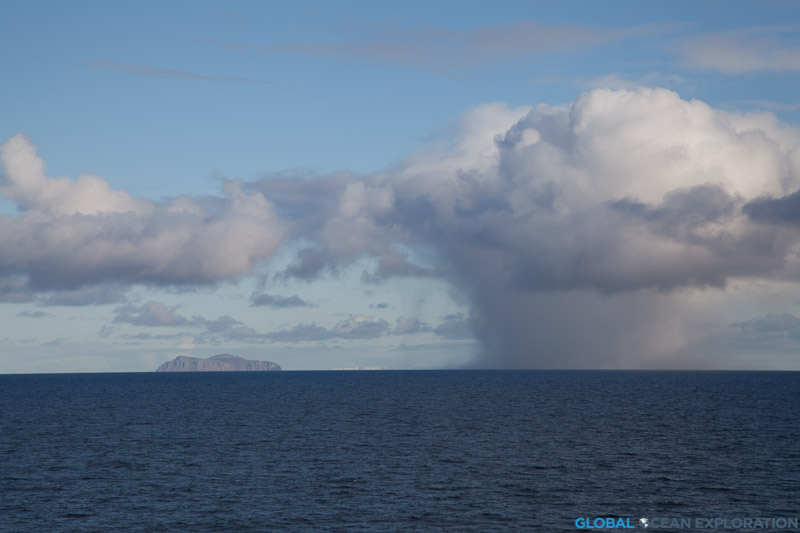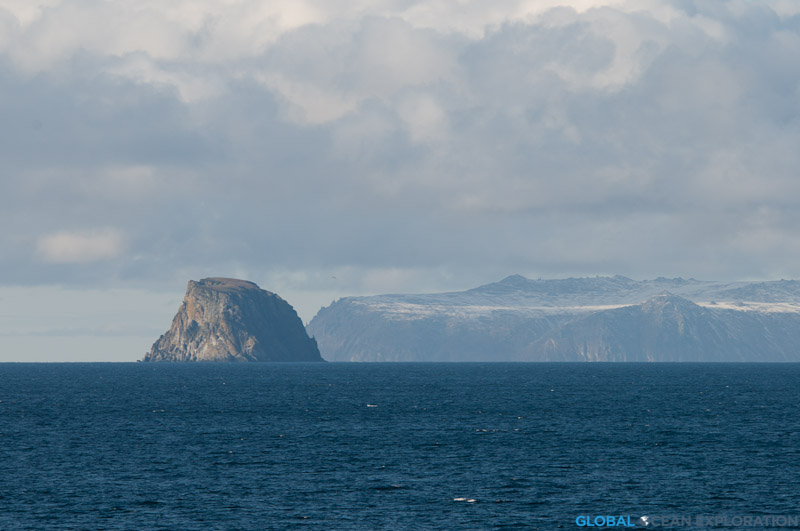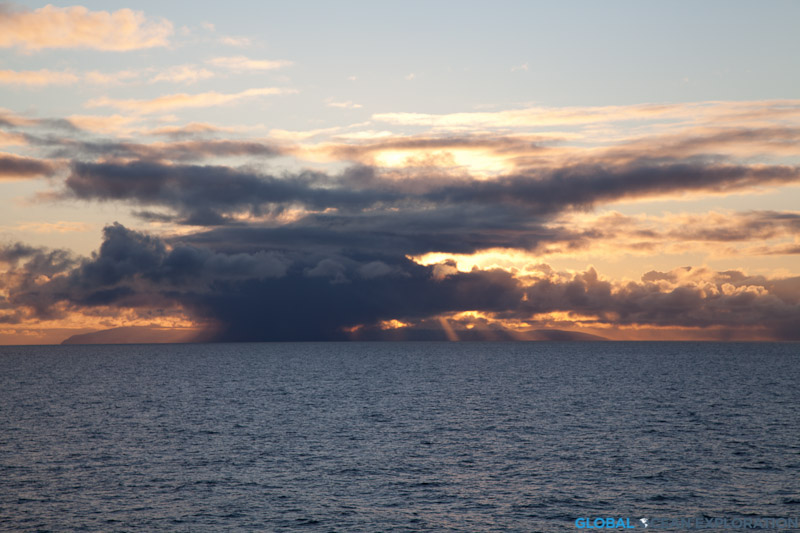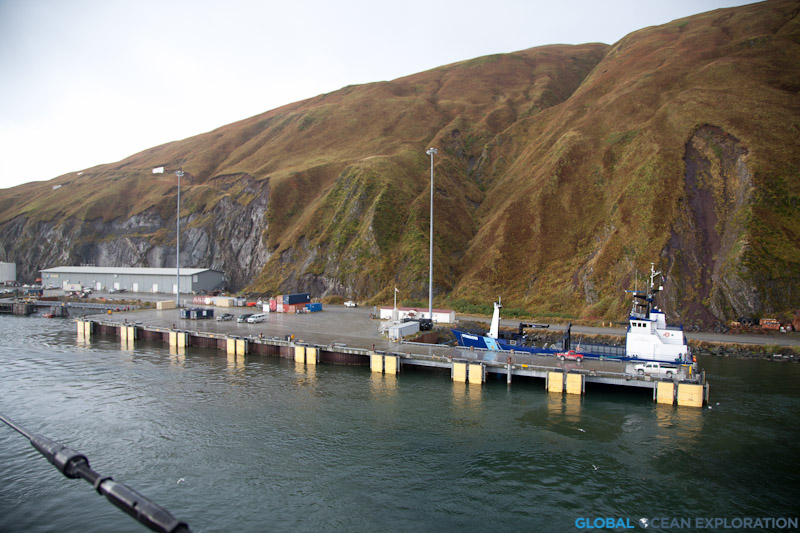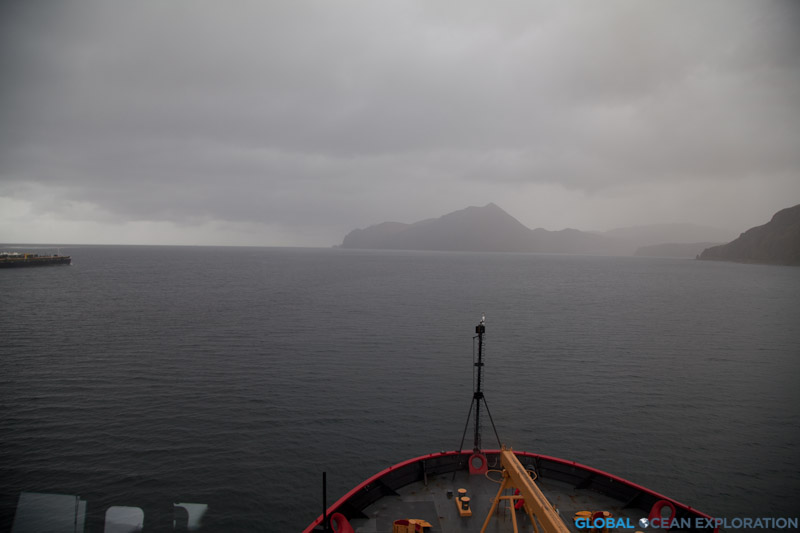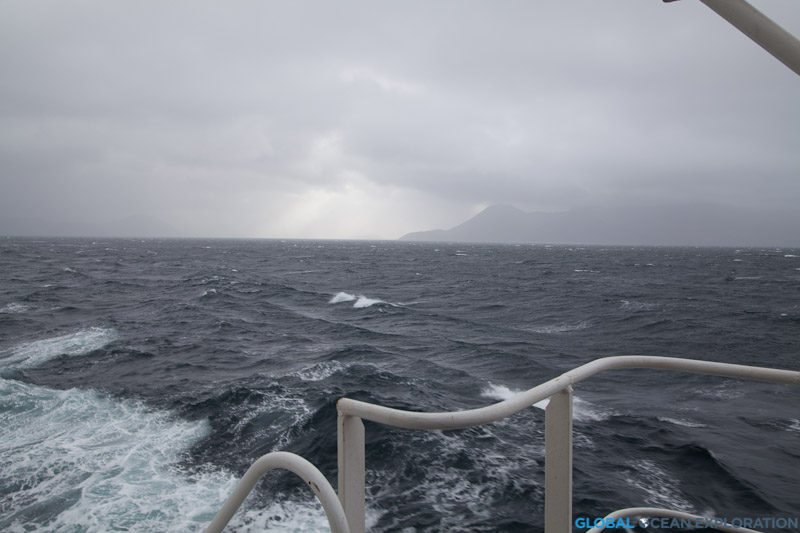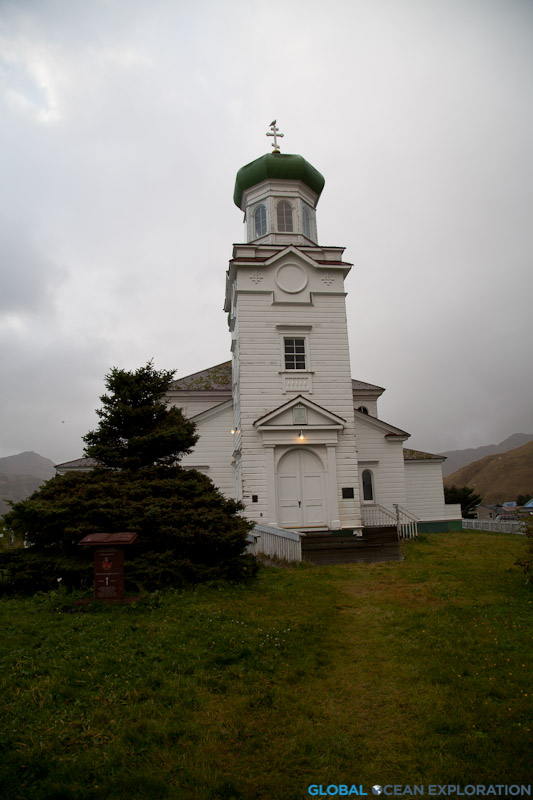
Once settled into the hotel, we piled into our borrowed truck and headed into town to check out the store and the crab processing plant where we were going to be eating our meals for the next two days. Town was three miles from the airport down a dirt road with snow-covered fields on either side. Once in town, I was struck by the weather beaten houses and starkness of the landscape. There were crab pots piled alongside the road and in town, there were boats of all sizes on land waiting for spring so they could be put back into the water. We pulled up to a large warehouse which was the crab plant and explored the area. I got my first up close look at the Bering Sea and felt the frigid sea spray while standing along the shore. The water was green and the swells were large as they broke along the rocky shore. It was cold and windy with occasional rain and snowflakes falling. While we were standing on the rocks, we looked over and all of sudden an arctic fox popped up and looked at us inquisitively. He was nestled into the rocks and we had clearly woken him up. He scurried off but not in a particular hurry.

After looking around some more outside, I had the opportunity to go into the crab plant and check out some opelio crab (snow crab) being processed. I was super excited to see the crabs that many of us watch being caught in Deadliest Catch up close and to see the operation at work. It was pretty amazing the speed which everything happened, from picking the crabs, to cooking them, to packaging them for freezing. It was quite an operation. Outside, crab boats were being unloaded with heaping baskets filled with crabs getting taken out of the hold. Usually the crab season has ended by this time of year but the winter has been one of the worst in forty years according to the locals and the ice came further south than normal so the season has dragged on and crab are still coming in. This gave us the opportunity to see the crab, but the processors and fishermen are ready for the season to be over as it is has already lasted a month longer than usual.

That was enough of an adventure for the day and we are all getting acquainted with one another. It sounds like this group of scientists is planning some interesting work so I am looking forward to hearing more about it and sharing it with you.
After packing up my gear, I headed to the airport in Anchorage to begin my journey to St. Paul in the Pribilof Islands, a group of islands in the middle of the Bering Sea. I met a few other scientists who were also meeting the ship in St Paul in the airport. The plane to St Paul was a small propeller plane. Boarding the plane was interesting as there was no security and we just walked on to the plane which was on the rickety old side. The passengers on the plane were two additional passengers and us. It was a beautiful day in Anchorage so we were on our way. The flight time was to be three hours across Alaska and on to the Bering Sea. About halfway through the flight, we passed over the coastline and were flying over a frozen Bering Sea. The patterns of ice were beautiful and we were all filled with anticipation of what was to come.

Three hours into the flight, as we were all anticipating an on time arrival, a rarity in the Pribilofs as the Bering Sea is known for its inhospitable weather, the pilot came over the PA and announced that the weather was not good enough to land and that we had enough gas to circle for one hour before going to Plan B. I didn’t know what Plan B was but I was hoping not to find out. After 45 minutes, we continued our decent into the fog to St Paul. We were going down and down with no ground in sight until we were about 100 ft off the ground and I spotted a few breaking waves beneath us and then we touched down. It was certainly an interesting landing.
Once we landed and looked around, we all were wondering where we were. All we saw was white with tufts of grass here and there. Would there me a terminal? We then pulled up to a hangar and that seemed to be the terminal. We deplaned and then found our luggage in a neighboring building that turned out to be the King Eider Hotel where we would make our home for at least the next two days until we made it to the ship, hopefully on Sunday.

If you want to check out where the ship is in the Bering Sea, follow this link to the USCG Healy’s website where the ship’s position is logged:
http://www.icefloe.net/cruisetrack.html
This is a map of the cruise plan of where samples will be taken during the cruise:

Here are some images of the sea ice coverage currently in the study area. It is early spring now so the ice should begin to recede. I am currently in Anchorage where it is a balmy 30 degrees Fahrenheit. I have been looking at the ice images in order to anticipate what lies ahead. (The images are from the Alaska Ocean Observing System.)

The white indicates where there is ice coverage. This is a satellite image much like a sea surface temperature map or productivity map.
The open water is very rough so the ship is likely to stay in the ice where it will be calmer because the ice dampens the swell.
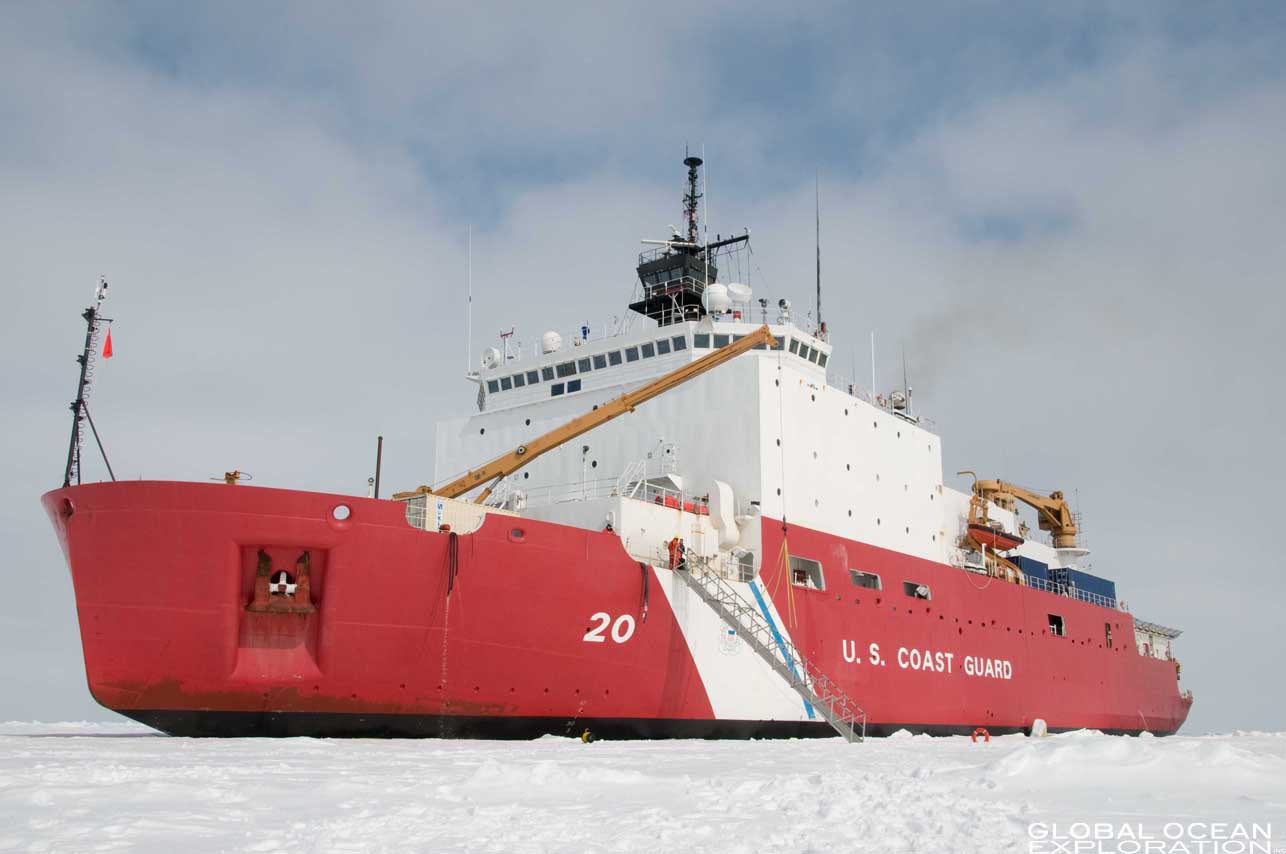
On March 29, fifty scientists set out from Dutch Harbor, AK as part of the International Polar Year (IPY) aboard the United States Coast Guard Cutter Healy to try to elucidate the effects of climate change on the Bering Sea Ecosystem. The second cruise of a six-year, $50 million study funded by the National Science Foundation and North Pacific Research Board, HLY0802 (cruise number) is focused on the animals and plants at the base of the food chain.
The Bering Sea is one of the world’s most prolific bodies of water providing more than half of the seafood caught in the United States. The productivity of these waters is largely influenced by seasonal sea ice. These waters are home to King Crab, Alaskan Pollack, Cod and many other commercially valuable species.
I am looking forward to joining the ship on Sunday in the waters off of St. Paul in the Pribilof Islands in the middle of the Bering Sea.

The weather forecast looks interesting for the upcoming days, rough and windy.

I am one week away from departing New York for Alaska and the Bering Sea. This means a tremendous amount of preparation and organization. I am making spreadsheets of gear, charging batteries and ensuring that I have back up equipment and chargers. Currently the gear I am taking consists of two high definition video cameras, two digital SLR cameras with multiple lenses, my favorite camera, a Mamiya 7II medium format camera, a computer, tapes, memory cards, etc, etc, etc. This will all be packed into a waterproof case and a backpack with waterproof zippers. Hopefully they will let me on the plane with all of the gear.

I have not thought about the clothing I will need although I must make sure to pack my hard hat and steel toed boots for working on deck and then loads of warm clothes.